Most boats are designed for life on the water—not for travelling on the road.
Once a vessel exceeds standard road dimensions, transporting it becomes much more than simply loading it onto a trailer and driving away. Careful planning, specialist equipment, permits, and experienced operators all play a crucial role in ensuring the journey is completed safely and legally.
At MGB Transport, we’ve spent more than 30 years transporting oversized boats throughout Ireland, Great Britain, and mainland Europe. Wide-load movements are part of our everyday work, and our experienced team manages every stage of the process from planning through to delivery.
Here’s what goes into transporting a wide-load boat.
What Is a Wide-Load Boat?
Many sailing yachts, motor cruisers, and specialist vessels exceed the standard dimensions for normal road transport.
Factors that can make a boat an oversized load include:
- Overall beam (width)
- Overall length
- Height on the trailer
- Weight
- Mast and additional equipment
Every move begins with understanding the boat’s dimensions so we can determine the safest transport method and ensure all legal requirements are met.
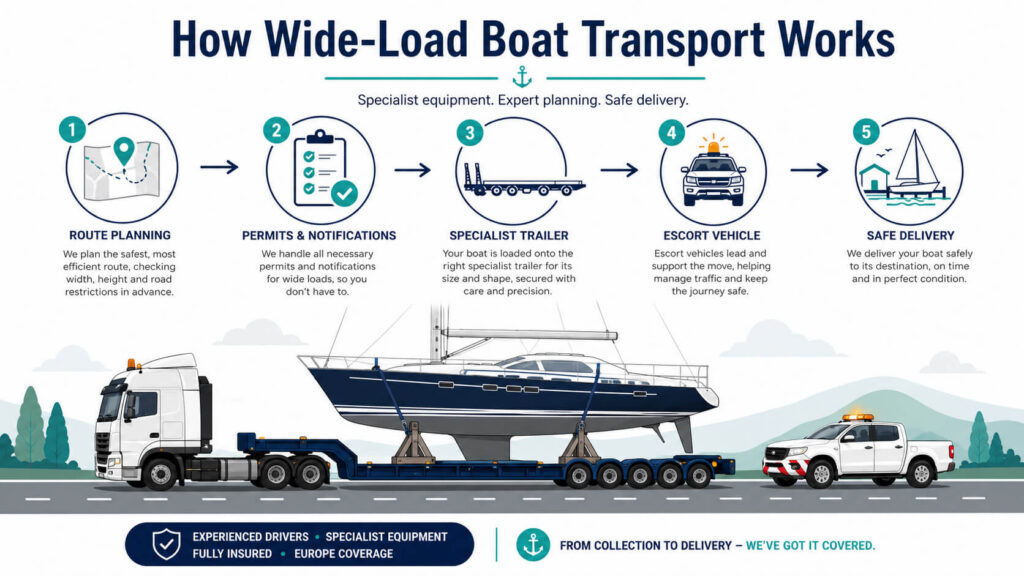
Permits and Notifications
Oversized loads often require advance notification or permits before they can travel on public roads.
The exact requirements vary depending on:
- The country
- The width and length of the load
- The planned route
- Local authority requirements
As part of our service, MGB Transport handles the transport planning and any required notifications, so you don’t have to worry about navigating the paperwork yourself.
Our team keeps up to date with the relevant transport regulations across Ireland and the UK, ensuring every move is planned in accordance with current requirements.
Careful Route Planning
One of the most important parts of transporting a wide-load boat happens long before the engine starts.
The shortest route isn’t always the safest—or even possible.
Our transport planners carefully assess every journey, considering obstacles such as:
- Low bridges
- Narrow country roads
- Tight bends and roundabouts
- Roadworks and temporary restrictions
- Weight limits
- Ferry crossings
- Marina and boatyard access
Choosing the right route helps minimise delays, reduces risk, and ensures your boat arrives safely.
Choosing the Right Trailer
Every boat is different, which is why we operate a fleet of specialist trailers rather than relying on a one-size-fits-all solution.
Depending on your vessel, we may use:
- Andover Trailer – ideal for motorboats, RIBs, and shorter keel boats.
- King Trailer – designed for larger yachts and motorsailers.
- Krollseg Trailer – our newest addition, offering exceptional flexibility for larger vessels.
- Nooteboom Extendable Trailer – designed for longer and more specialised boat transports.
Selecting the correct trailer isn’t just about supporting the boat properly—it’s also about ensuring the overall transport combination can safely navigate the planned route.
Escort Vehicles When Required
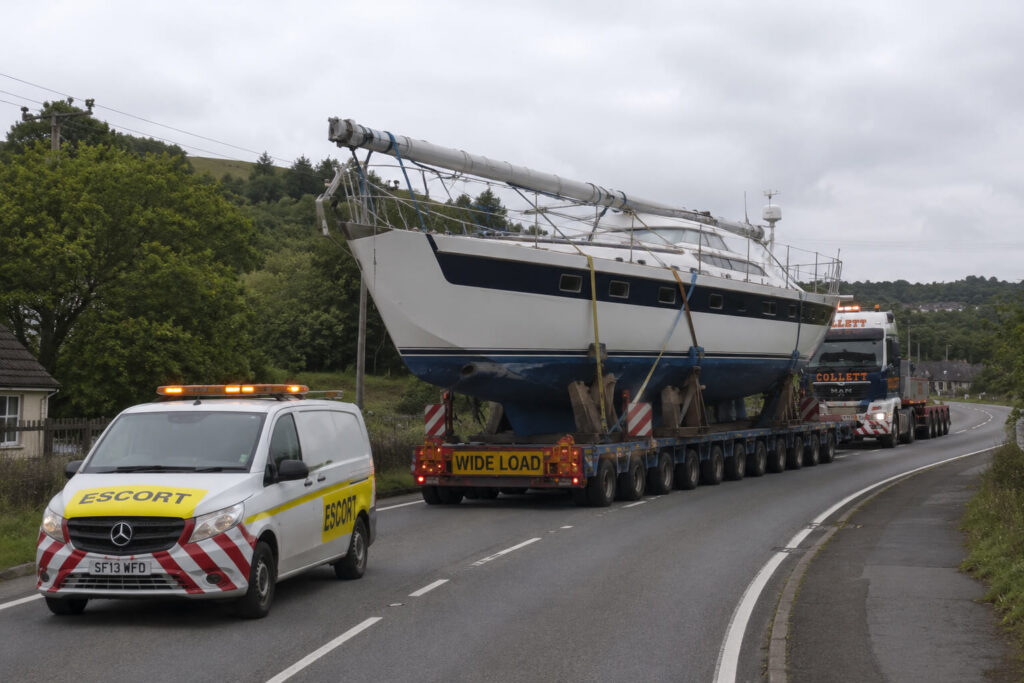
Some oversized loads require escort vehicles to improve safety and assist with traffic management during the journey.
Depending on the size of the vessel and the route involved, we use:
- Our own escort vehicles
- Trusted third-party escort providers where appropriate
Escort arrangements are determined during the planning stage and are organised as part of the overall transport operation whenever required.
Our priority is always to ensure the move complies with current transport regulations while maintaining the highest standards of safety for both the public and your vessel.
Timing Matters
Oversized transport doesn’t always have the flexibility of standard road journeys.
Some routes have restrictions on:
- Peak traffic periods
- Weekday travel
- City centre access
- Bridge crossings
- Ferry schedules
Careful scheduling helps minimise disruption while ensuring the journey runs as efficiently as possible.
Because we operate seven days a week between 8am and 7pm, we can often plan transport around these restrictions and find the most suitable time for your move.
Experience Makes the Difference
Transporting an oversized boat is about much more than having a large trailer.
It requires experience, planning, and attention to detail.
Every successful move depends on:
- Accurate measurements
- Correct trailer selection
- Secure loading procedures
- Professional route planning
- Regulatory compliance
- Ongoing communication throughout the journey
These are the details that protect your investment and help ensure a smooth transport experience from collection to delivery.
Why Choose MGB Transport?
With over 30 years of specialist boat transport experience, wide-load movements are simply part of what we do.
We’ve safely transported thousands of vessels across:
- The Republic of Ireland
- Northern Ireland
- England
- Scotland
- Wales
- France and parts of mainland Europe
Our experienced team understands the challenges involved and plans every move with safety, efficiency, and professionalism in mind.
When choosing a transport company, it’s always worth asking about their experience with oversized loads. The right equipment is important—but knowing how to use it is what makes the real difference.
Let Us Handle the Planning
Moving a wide-load boat doesn’t need to be complicated.
From route planning and specialist trailers to transport logistics and delivery, MGB Transport manages the process from start to finish, giving you complete peace of mind.
Whether you’re transporting a sailing yacht, motor cruiser, RIB, or another specialist vessel, we’ll recommend the safest solution and provide a clear, competitive quotation.
Get in touch today for a free, no-obligation quote and let our experienced team take care of every aspect of your boat transport.